 |
|
|
 |
|
June 11th 2026 |
|
There's always been one thing ecommerce couldn't do that physical retail could.
Let people touch the product, try it on, hold it in their hands, and see it.
That gap between seeing something on a screen and experiencing it has been the single biggest reason people hesitate before clicking buy.
It's why return rates in ecommerce are so high and why some customers still prefer walking into a store.
Augmented reality is closing that gap. And in 2026, it's doing it faster than most brand owners realize. |
|
|
|
What Augmented Reality (AR) Means for Online Shopping |
|
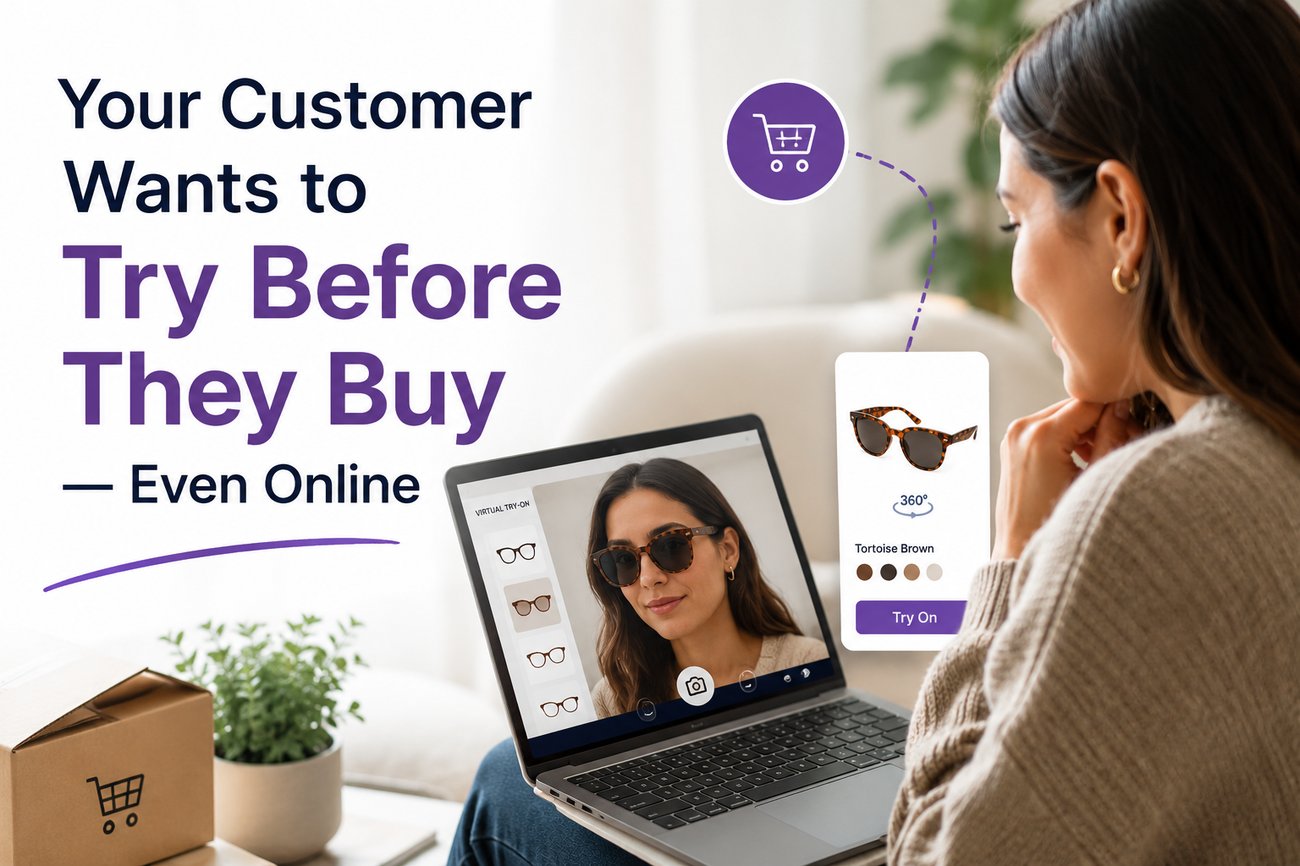
Augmented reality in ecommerce means your customer opens their phone, points the camera at themselves or their room, and sees your product, right there, in their space.
This might mean a lipstick shade on their real face. A supplement bottle on their kitchen counter. A jacket on their body. A sofa in their living room.
Over 100 million consumers are already using AR to shop online and in stores.
And the brands already using it are seeing the results directly. Stores using advanced AR are seeing a 30% decrease in return rates and a 60% increase in customer confidence.
Think about what a 30% drop in returns alone would do for your margins.
|
|
|
Why This Matters in Beauty, Skincare & Apparel
|
|
These are the categories where buying uncertainty is highest.
"Will this shade work for my skin tone?" and "Will this fit the way it looks on the model?" are the questions sitting between your customer and the checkout button.
Sephora's AR beauty try-on tool has been setting a new standard in the beauty industry, allowing customers to virtually try on lipsticks, eyeshadows, and other products directly on their faces, exploring multiple colours and styles at once. When a brand the size of Sephora builds its entire in-app experience around AR try-on, it's a signal about where the category is heading.
And it's not just beauty. Apparel brands are using AR to let customers see how clothes fit on different body types. Jewellery brands are letting shoppers try on rings and necklaces through their browser. Furniture and home goods brands have been doing this for years, and the conversion data has always been compelling.
As more consumers experience AR try-on through major brands, the absence of the feature on a competitor's product page will increasingly be interpreted as a trust deficit rather than a neutral gap.
|
|
|
|
How Accessible Is Augmented Reality (AR)? |
|
WebAR browser-based augmented reality means your customers don't need to download an app. They scan a QR code or click a link, and the AR experience opens directly in their browser.
TikTok Shop, Instagram Shopping, and Pinterest are actively developing AR try-on capabilities that allow purchase decisions to happen within social feeds.
For brands with strong social discovery channels, this represents the most frictionless AR deployment available.
You don't need to launch an AR feature tomorrow. But you do need to understand where this is heading and start thinking about where it fits in your brand's long-term goals.
Start by looking at what your competitors are already doing. Then look at what the biggest brands in your category are building.
|
|
|
We Help Ecommerce Brands Stay Ahead of Changes Like This
|
|
At Pro Marketer, this is exactly what we do: track where e-commerce is heading and help brand owners build a strategy around it before it is too late.
We're helping ecommerce brands 3X their revenue. Respond to this email to reach out to us.
|
|
|
|
Was this email forwarded to you? Sign up here.
P.S. Got a question, trend, or idea you want me to cover in the next newsletter? Hit reply, I'm all ears!
|
|
|
|
|
|
Arun.K
Pro Marketer
arun@promarketer.ca |
|
|
|
|
Sent to: _t.e.s.t_@example.com
Pro Marketer, 10 Thornmount Dr, Toronto, Ontario M1B 3J4, Canada
Don't want future emails? Unsubscribe |
|
|