 |
|
|
 |
|
Thursday, 28th May 2026 |
|
Let's start with something that might stop you mid-scroll.
The rules governing cosmetic products sold in the United States hadn't changed in over 80 years. Since 1938, to be exact. That's before televisions were in homes. Before the internet. Before ecommerce existed as a concept.
In December 2022, all of that changed.
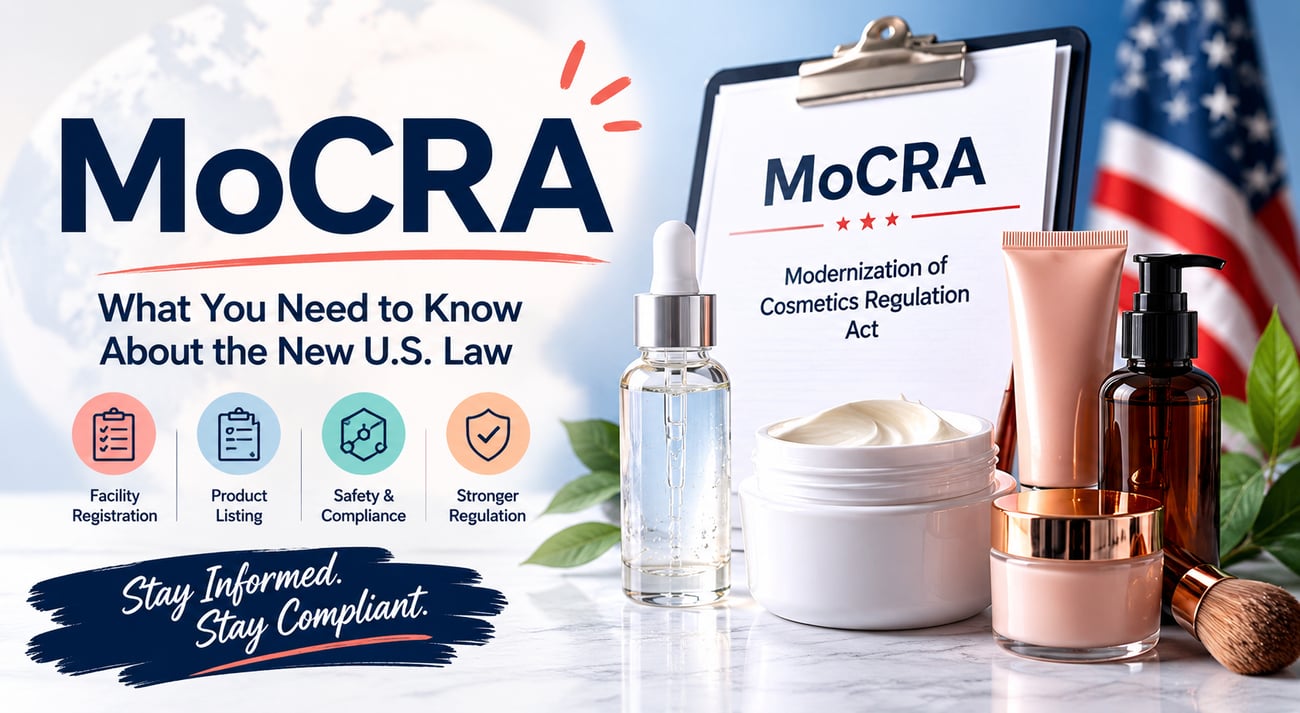
A new law called MoCRA (the Modernization of Cosmetics Regulation Act) was signed into effect. And if you sell skincare, beauty, or any cosmetic product in the US, this law applies to you directly.
The deadlines have already passed. The FDA already has new powers. And the brands that haven't caught up yet are operating at legal and financial risk without knowing it.
Here's what you need to understand. |
|
|
|
So What Exactly Changed? |
|
Before MoCRA, most of what the FDA asked cosmetic brands to do was optional.
You could register your facility if you wanted to.
You could report safety issues if you felt like it. Recalls were voluntary.
The system basically ran on good faith.
MoCRA ended all of that.
Here's what's now mandatory for cosmetic brands selling in the US:
-
Facility Registration: Every facility that makes or processes cosmetic products sold in the US must be registered with the FDA, including facilities outside the US. This includes Canadian brands selling into the American market. Registration must be renewed every two years. If your facility isn't registered and you're selling in the US, that's a violation of federal law.
-
Product Listing: Every single product you sell in the US must be listed with the FDA, including the product name, brand name, full ingredient list, product category, and the date it first went on sale. Listings need to be updated annually. This isn't a one-time task.
-
Safety Substantiation: Before you sell a cosmetic product in the US, you need documented evidence that it's safe. Tests, studies, research, or something credible that backs up the safety of your product and its ingredients. Products without this evidence are considered adulterated under the law and cannot legally be sold.
-
Adverse Event Reporting: If a serious adverse event involving your product occurs, such as hospitalizations, significant disfigurement, major hair loss, infections, or anything requiring medical intervention, you have 15 business days to report it to the FDA.
-
Label Updates: Your labels now need to include a US contact address, phone number, or online contact method for reporting adverse events. Every fragrance allergen in your product must be listed on the label. And if you make professional cosmetic products, the kind used by licensed professionals, they're now held to the same labelling standards as everything else.
-
Mandatory Recalls: Before MoCRA, if there was a safety issue with your product, you could quietly manage it. Recalls were voluntary. That's no longer the case. The FDA can now order a mandatory recall if it believes a product is adulterated, misbranded, or poses a serious risk. You no longer control that decision.
|
|
|
What This Means If You're a Skincare or Beauty Brand in 2026
|
|
All the major deadlines have passed. The FDA isn't waiting for brands to catch up. It already has the authority to suspend your facility registration, pull your products from sale, and review your safety and adverse event records.
The cost of getting this wrong is real, not just fines, but your products being pulled, your facility losing its registration, and your brand's reputation taking a hit that's very hard to recover from.
NOTE: MoCRA compliance is becoming a trust signal with consumers. Buyers in the skincare and beauty space are asking questions about what's in their products and how brands are held accountable.
Being able to show registered facilities, tested ingredients, and compliant labels is a competitive advantage, not just a legal obligation.
|
|
|
|
Where to Start If You Haven't Already |
|
If you're not sure where your brand stands, here's what to check:
-
Is your facility registered with the FDA's Cosmetics Direct portal?
-
Are all your products listed with the FDA and have accurate, up-to-date ingredient information?
-
Have your labels been updated to include a US contact method and fragrance allergen disclosure?
-
Do you have documented safety substantiation for every product you sell?
-
And does your team know what counts as a serious adverse event and what the 15-business-day reporting process looks like?
If the answer to any of those is "I'm not sure," now is the time to find out.
We've published a full guide that explains every MoCRA requirement, who's exempt, what's changed, and exactly what cosmetic brands need to have in place in 2026.
Read the full guide here: promarketer.ca/post/what-is-mocra
|
|
|
One Last Thing
|
|
At Pro Marketer, we work with ecommerce brands in beauty, skincare, and supplements every day.
Regulatory changes like MoCRA don't just affect your compliance; they affect your marketing, your product pages, your customer trust, and your long-term growth strategy.
If you want help building an ecommerce strategy that accounts for MoCRA, we're here for that conversation.
We help ecommerce brands 3X their revenue, and we'd love to show you how.
|
|
|
|
Was this email forwarded to you? Sign up here.
P.S. Got a question, trend, or idea you want me to cover in the next newsletter? Hit reply, I'm all ears!
|
|
|
|
|
|
Arun.K
Pro Marketer
arun@promarketer.ca |
|
|
|
|
Sent to: _t.e.s.t_@example.com
Pro Marketer, 10 Thornmount Dr, Toronto, Ontario M1B 3J4, Canada
Don't want future emails? Unsubscribe |
|
|
|
|